INDEPENDENT ROBOTICS ENGINEERING / 2026

Intelligence
in motion.

Engineering autonomous systems from the ground up — where perception, learning, control, and real hardware meet.

01 / PERCEPTION 02 / CONTROL 03 / LEARNING
ACUS / SYSTEM CONCEPT RESEARCH
Conceptual diagram of an intelligent mobile manipulator RGB-D / INPUT 6-DoF / ARM MOBILE BASE FIG. 001 PERCEPTION → ACTION
FIG 01 — CONCEPT ILLUSTRATIONR&D / 001
SCROLL TO EXPLOREAPPLIED ROBOTICS / R&D 2026
01 / OUR FOUNDATION

Built on real hardware. Focused on useful autonomy.

Our engineering experience spans 1/10- and 1/5-scale autonomous vehicles, an in-progress custom AMR, and learning-based control research. These foundations support our current exploration of robotic part handling and inspection.

ROS 2 / REAL ROBOTSPERCEPTIONCONTROLROBOT LEARNING
02 / PRIMARY DEVELOPMENT DIRECTION

From unsorted parts
to inspection decisions.

PROPOSED SYSTEM · IN DEVELOPMENT

We are exploring a robotic cell for automotive rubber components: detect parts in a tray or bin, calculate feasible grasps, move them through visual inspection, and sort by inspection result. The complete workflow has not yet been validated as an integrated product.

01◎

Perceive

RGB-D sensing for part location, depth, and grasp-region estimation.

02⌁

Grasp

6-DoF arm and five-finger hand with planned motion and grasp refinement.

03◈

Inspect

Evaluate near-field imaging and multiple viewpoints for surface defects.

04⇢

Sort

Route parts to OK / NG trays after an inspection decision.

Engineering focus RGB-D handling of dark, cluttered parts; inspection of gripper-occluded surfaces; safe robot motion and cycle-time evaluation.

View development roadmap
03 / ENGINEERING RECORD

Real projects. Clear stages.

Project photographs, implementation details, and public code where available. Completed results and future plans are identified separately.

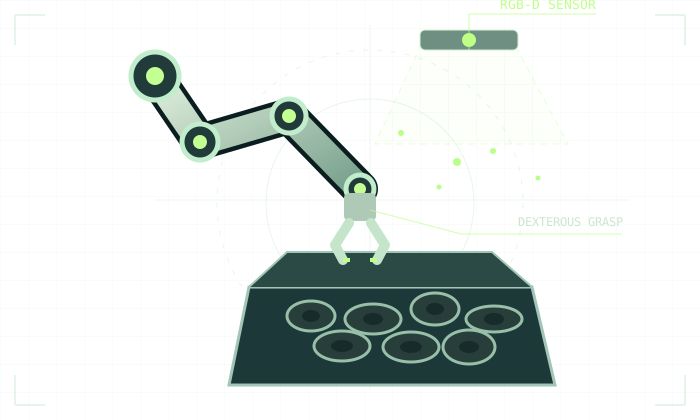
R&D / 01Concept illustration of a robotic arm identifying and grasping a rubber partCONCEPT SCHEMATIC · NOT A PRODUCT PHOTO
INDUSTRIAL MANIPULATIONArchitecture & feasibility work

Vision-guided pick, inspect & sort

An in-development workcell concept for black automotive rubber bushings. The study uses a RealMan RM65-B 6-DoF arm and RH56F1 five-finger hand, with stereo depth for grasp planning. Additional close-up imaging is being evaluated to inspect surfaces that may be occluded during grasping.

Being evaluatedDiffusion-based grasp candidates, MoveIt 2 approach planning, and residual reinforcement learning for near-contact adjustments. These are planned modules, not verified production features.

RM65-BRH56F1RGB-DMoveIt 2RL / STUDY
Discuss the project
HARDWARE / 02
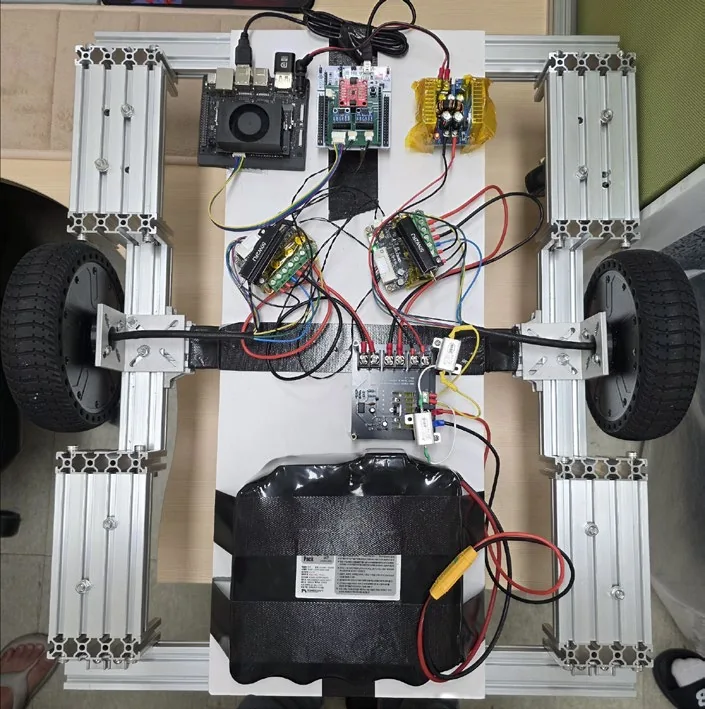
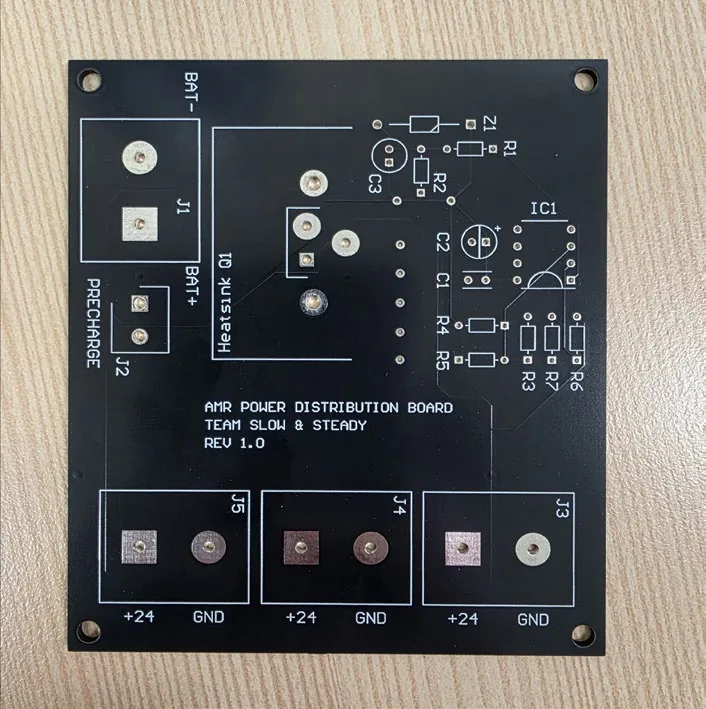
Real in-progress autonomous mobile robot chassis with wheels, frame, and wiringCustom power distribution and pre-charge prototype PCB
REAL PROTOTYPE PHOTOGRAPHS
AUTONOMOUS MOBILE ROBOTHardware prototype · ongoing

Building an AMR from the electronics up

A differential-drive mobile robot capstone project (2026–present). Implemented work includes STM32–ODrive S1 CAN communication, drive sizing and torque analysis, power distribution and pre-charge PCB design, and chassis integration. ROS 2 navigation and multi-floor/elevator scenarios remain active development targets.

STM32ODrive S1CANPower PCBROS 2
Related ROS 2 mapping research on GitHub
AUTONOMY / 03
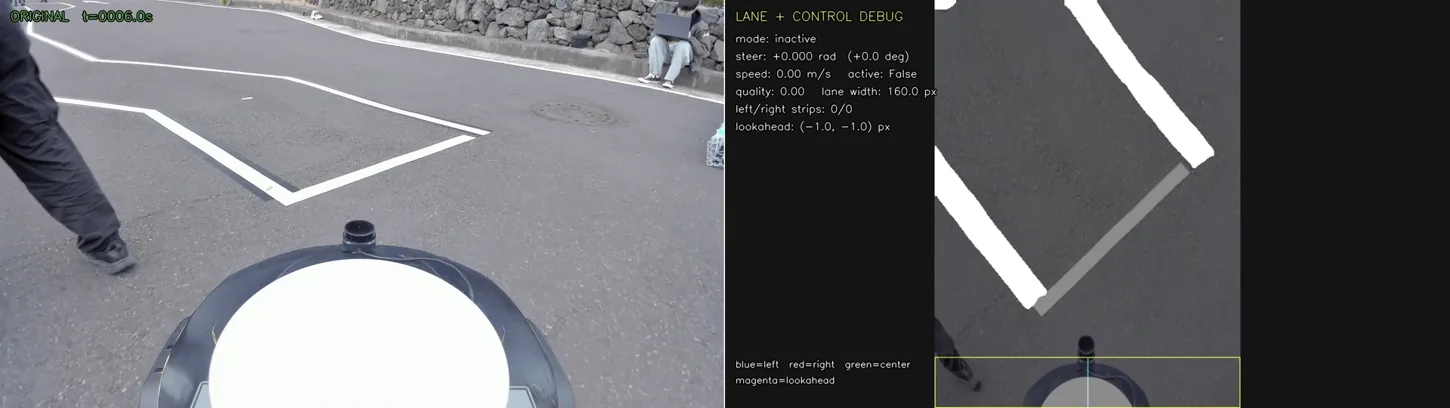
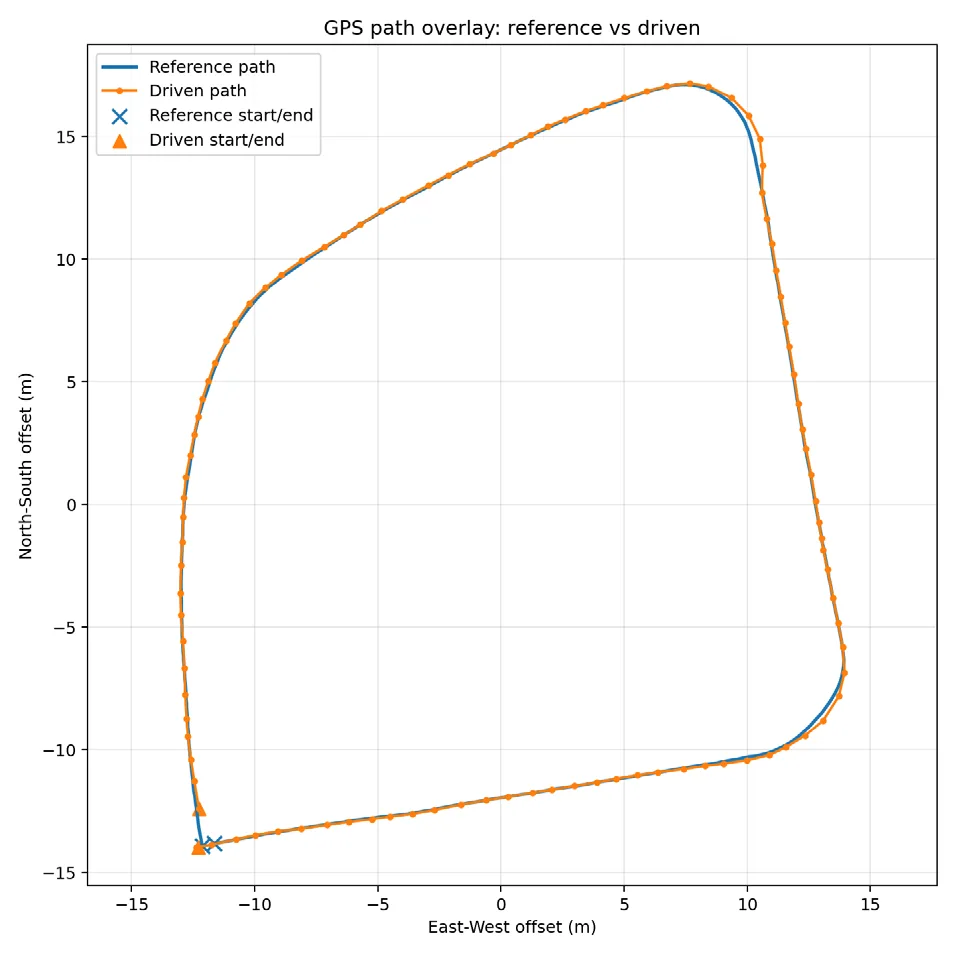
Actual HENES lane perception and BEV debugging capture from a 1/5-scale driving testPlotted GNSS reference and driven route from vehicle development
PERCEPTION & ROUTE LOGS
1/5-SCALE AUTONOMOUS VEHICLEImplemented · ROS 2 stack

Camera, LiDAR, and RTK-GPS autonomy

A real 1/5-scale driving stack built with ROS 2: YOLO lane perception and bird's-eye-view geometry feed Pure Pursuit steering; 2D LiDAR supports Follow-the-Gap avoidance; RTK-GPS provides waypoint navigation. A control bridge arbitrates modes and implements timeout-based safe stopping.

ROS 2YOLO / BEV2D LiDARRTK-GPSJetson
View implementation on GitHub
AUTONOMY / 04
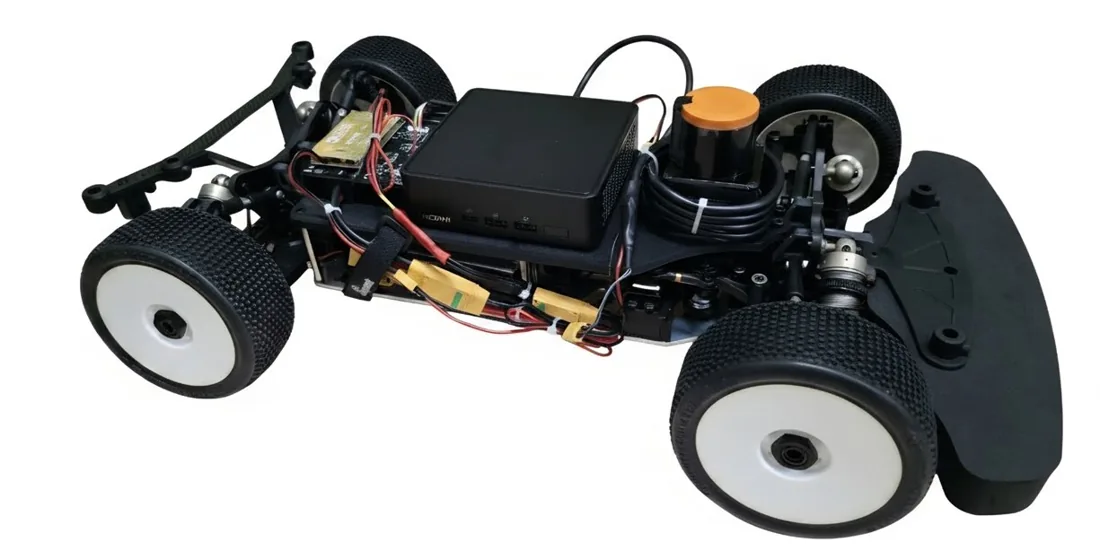
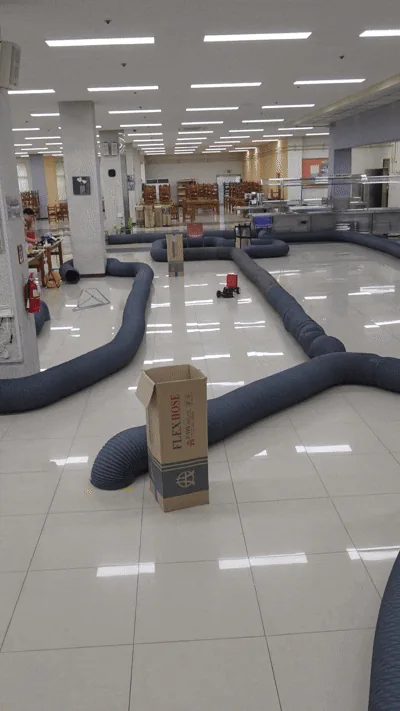
Real F1TENTH race car electronics and chassisObstacle course used for F1TENTH robotics development
ACTUAL ROBOT & TEST TRACK
1/10-SCALE ROBO-RACINGDeveloped · 2024–2026

Stanley tracking & Frenet obstacle avoidance

An F1TENTH/RoboRacer implementation integrating Stanley steering with a Frenet-frame local planner. The ROS 2 package generates nine lateral candidate paths, checks LiDAR and occupancy-grid constraints, and chooses a collision-free route around obstacles.

F1TENTHStanleyFrenetLiDARROS 2
View planner code on GitHub
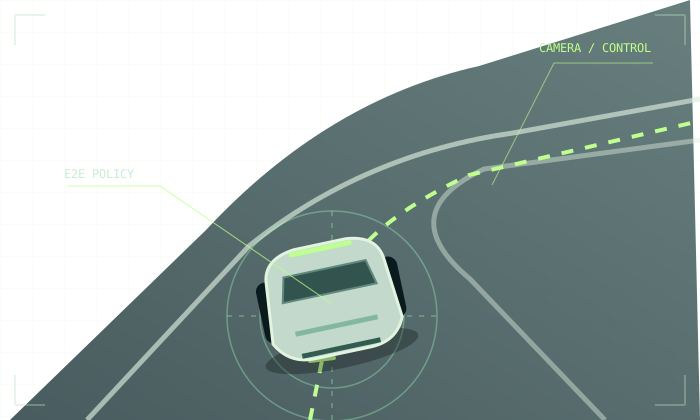
RESEARCH / 05Conceptual visualization of end-to-end driving and perception, not a CARLA screenshotSIMULATION-BASED EVALUATION
LEARNING-BASED AUTONOMYCARLA simulation evaluated

Multi-scale vision for end-to-end control

A CARLA behavior-cloning study comparing a ResNet-34/CILRS baseline against a multi-scale YOLO26s feature encoder for steering and longitudinal control. The proposed policy completed 5 of 5 evaluation routes in the internal simulation experiment; real-road performance is not implied.

Reported CARLA result5/5 route completions · approximately 2.5 km per run · test-only result

CARLAYOLO26sBehavior CloningCILRSPPO / RESEARCH
Request research details

Photos are taken from the engineering portfolio. Source repositories are personal or team project contributions, not claims of production deployment by a registered company.

04 / CAPABILITIES

Full-stack robotics engineering.

Components demonstrated in projects and methods under active research.

01 ↗

Perception

Camera and RGB-D sensing, YOLO-based perception, BEV transforms, and LiDAR integration.

RGB-D / YOLO / LIDAR
02 ↗

Planning & control

Stanley/Frenet planning, Pure Pursuit, ROS 2 motion control, CAN interfaces, and safety logic.

ROS 2 / STANLEY / CAN
03 ↗

Robot learning

Behavior cloning and CARLA evaluation; diffusion grasp proposals and residual RL under study.

BC / PPO / DIFFUSION STUDY
04 ↗

Hardware integration

Power electronics, custom PCB prototypes, embedded firmware, drivetrain design, and testing.

PCB / STM32 / ODRIVE
PUBLIC ENGINEERING ARTIFACTS

Source code you can inspect.

Selected public ROS 2 repositories make implementation details reviewable, while private and industrial project assets remain unpublished.

05 / DEVELOPMENT ROADMAP

From working subsystems
to a validated robot cell.

The near-term goal is a reproducible pick–inspect–sort prototype for difficult rubber parts, with transparent measures of grasp success, inspection quality, cycle time, and recovery from failures.

BUILDINTEGRATEVALIDATE

A development roadmap is not a claim that these milestones, experiments, or commercial deployments are complete.

01 /ENGINEERING FOUNDATION

Controls & platform experience

Existing real-robot work in AMR electronics, vehicle perception, and motion control.

02 /IN PROGRESS

Robotic handling workcell

Validate RGB-D localization, grasp feasibility, multi-view inspection, and physical sorting integration.

03 /FUTURE EVALUATION

Learning & field readiness

Compare residual-RL control with baselines; log failures and measure reliability over repeated trials.

AI /

Exploring Claude-assisted engineering workflows

Future evaluation ideas include summarizing ROS 2 diagnostics, drafting structured inspection reports from verified results, and improving developer documentation. Claude is not presented as an already deployed safety-critical robot controller.

EVALUATION IDEA
06 / LET'S CONNECT

Building the next step.

For collaboration on robotic handling, perception, embedded control, and demonstration opportunities, contact ACUS Robotics. The site documents early-stage R&D and selected engineering work.